We live in an era where you can pay for a latte with a tap of your smartwatch, split a dinner bill using facial recognition, and have AI autonomously manage your investment portfolio. Yet, if you look closely at the checkout line at your local grocery store, you might notice something surprising: more and more people are handing over cold, hard cash.
Despite 2026 being a profoundly digital-first world, a massive financial counter-trend has emerged. In a desperate bid to combat the persistently high costs of housing, food, and everyday essentials, consumers are stepping backward in time. They are ditching the plastic, logging out of the budgeting apps, and joining the anti-digital budgeting movement.
Here is why cash is making a massive comeback—and why it might just be the secret to saving your budget this year.
The Psychology of Physical Money: The “Pain of Paying”
To understand the cash revival, we have to look at behavioral psychology. Over the last decade, tech companies and banks have spent billions of dollars engineering “frictionless” payments. They wanted to make spending money so seamless that you barely even realize you’re doing it.
And it worked. Swiping a card or tapping a phone doesn’t feel like losing money. It feels like a minor digital transaction.
Physical cash, however, introduces a psychological phenomenon known as the “pain of paying.” When you have to physically open your wallet, count out twenty-dollar bills, and hand them over to a cashier, your brain registers the loss of resources. That split-second of friction forces you to pause and ask yourself, Do I really need to spend this right now? For many people, reintroducing that friction is the only way to stop mindless impulse spending in an economy where a basic bag of groceries can easily break $100.
The 19.4% Plastic Trap
The return to cash isn’t just about psychology; it’s about survival mathematics.
With average credit card interest rates stubbornly hovering near 19.4% this year, the cost of “convenience” has simply become too high. In previous years, consumers might have felt comfortable floating their lifestyle on credit, assuming they could pay it down eventually. But with inflation stretching paychecks to their absolute limits, falling behind on a credit card balance today means getting trapped in a brutal cycle of compounding debt.
People are realizing that the 2% cash-back rewards they earn on a premium credit card mean absolutely nothing if they are paying nearly 20% in interest. By switching entirely to cash for their nonessential, day-to-day purchases, consumers are effectively cutting up the plastic to protect their future selves.
Modern “Cash Stuffing”: The Envelope System 2.0
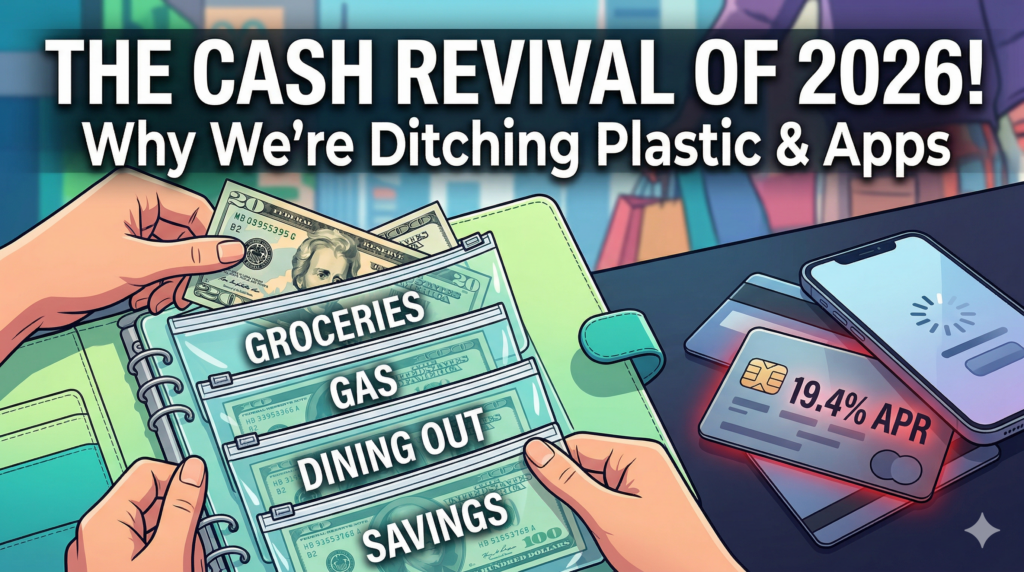
If you think budgeting with cash means stuffing wrinkled bills into old, torn paper envelopes like our grandparents did, think again. The 2026 anti-digital budgeting movement has a highly aesthetic, modernized face: Cash Stuffing.
Dominating financial feeds across social media, cash stuffing is the envelope system tailored for the modern consumer. Here is how it works:
- The System: Every payday, individuals go to the ATM and withdraw their allotted budget for variable expenses—things like dining out, entertainment, clothing, and non-essential groceries.
- The Binders: They use dedicated, often personalized budget binders filled with clear, labeled zip-pouches (the “envelopes”).
- The Rule: Once the “Dining Out” pouch is empty, that’s it. You cannot tap a card, you cannot transfer funds from savings on your phone. You are done eating out until the next payday.
This method gamifies saving and provides an immediate, visual representation of your remaining wealth. You don’t have to log into an app to see if you have enough money for a movie ticket; you just look in the pouch.
How to Implement a Hybrid Approach
You obviously can’t (and shouldn’t) pay your mortgage, car payment, or electricity bill with a stack of bills. The most successful participants in the anti-digital movement are adopting a hybrid approach:
- Automate the Fixed: Keep your fixed, essential bills (housing, utilities, insurance) strictly digital. Set these to auto-pay from your main checking account so you never miss a payment.
- Cash the Variable: Identify your “problem” spending areas—usually food, entertainment, and shopping. Withdraw physical cash for these categories every week or two weeks.
- Leave the Cards at Home: When you go out on the weekend, leave your credit cards in a drawer. Take only the cash you plan to spend. If you don’t have the plastic on you, you literally cannot overspend.
Taking Back Control
The return to cash in 2026 isn’t a rejection of technology; it’s a rejection of the debt and overconsumption that technology has made far too easy. By forcing ourselves to physically interact with our money again, we are taking back control of our financial boundaries. Sometimes, the best way to move forward is to take a deliberate step back.
Top Articles